

Plastic Recycling Machines
Your Professional Plastic Recycling Machines Supplier
Wisdom Ring Machinery is a professional manufacturer of scrap recycling equipment. We provide copper recycling machines, shredders, balers, metal shears, tire recycling lines, and plastic recycling equipment for customers in recycling, waste processing, and metal recovery industries worldwide.
Experienced Manufacturing
With over 30 years of industry experience, we focus on stable machine performance, practical design, and long-term operation for industrial recycling applications.
Strong Technical Team
Our team includes 15 engineers dedicated to product development and technical improvement, helping customers achieve efficient and reliable recycling processes.
Complete Customer Support
We provide complete service from machine selection and production to installation and after-sales support, ensuring smooth communication and dependable cooperation.
-
 Plastic Crusher MachineLow energy consumption, easy to install, operate and maintainChange the different diameter sieve, can get different size of final scrapscrap plastic recycling from 200-2000kg/hfull automatic,easy toAdd to Inquiry
 -
 Waste Plastic CrusherThis plastic crusher is designed for efficient recycling of waste plastics and can process various plastics such as PET, PE, and PP.It uses alloy steel blades,which have a long service life and aAdd to Inquiry
 -
 Plastic Granulator MachineDeep mixing is achieved through a building block twin-screw extruder, followed by water-cooled granulation to produce high-quality, uniform plastic granules.It efficiently performs filling, blending,Add to Inquiry
 -
 Plastic Granulating LineRecycles waste and scraps from various plastic films, plastic bags, bubble wrap, etc., including low-density polyethylene, high-density polyethylene, and linear low-density polyethylene, for reuse inAdd to Inquiry


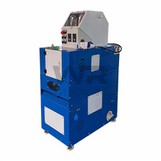

Parameter
|
Model |
W-QL180 |
W-QL250 |
W-QL300 |
W-QL400 |
W-QL500 |
W-QL600 |
W-QL700 |
W-QL800 |
|
Crusher Capacity (KG/H) |
50-100 |
150-200 |
200-300 |
250-450 |
400-700 |
450-800 |
650-1300 |
750-1500 |
|
Voltage (V) |
380v (three phrase) |
|||||||
|
Power (KW) |
2.2 |
4 |
5.5 |
7.5 |
11 |
15 |
22-37 |
37-55 |
|
Rotary knives (PC) |
9 |
9 |
9 |
12 |
15 |
18 |
24 |
30 |
|
Fix knives (PC) |
2 |
2 |
2 |
2 |
2 |
4 |
4 |
4 |
|
Sieve size(MM) |
235*185 |
322*246 |
357*317 |
417*400 |
422*517 |
470*617 |
/ |
/ |
|
Sieve hole diameter (MM) |
6 |
8 |
8 |
10 |
10 |
10 |
12 |
12 |
|
Knife roller speed (R/MIN) |
520 |
617 |
617 |
650 |
627 |
576 |
480 |
480 |
|
Feed Inlet size(MM) |
160*180 |
250*160 |
320*200 |
420*220 |
520*260 |
600*240 |
800*500 |
1000*610 |
|
Storage hopper size (MM) |
250*300 |
700*300 |
795*390 |
860*490 |
1070*620 |
1070*710 |
/ |
/ |
|
Measurement(MM) |
630*520*950 |
900*700*1050 |
1000*750*1180 |
1060*880*1320 |
1150*1000*1450 |
1200*1060*1650 |
1850*1410*2130 |
1950*1580*2500 |
|
Weight (KG) |
140 |
280 |
348 |
450 |
680 |
800 |
1700 |
2800 |

The plastic recycling machines produced by our company mainly include the following types:
Plastic Crushers
Plastic Crusher Machine is suitable for crushing plastic products such as ordinary sheets, pipes, profiles plates and packaging materials. The flat knife set is suitable for various blow molding parts, hollow products, various film products, such as PET bottles.
Plasic Granulator Machines
The Plastic Granulator Machine is a robust and versatile size-reduction machine engineered to transform various forms of plastic waste into consistent, free-flowing granules.
Advantages of Plastic Recycling Machines
Increased Recycling Efficiency
Plastic recycling machines streamline the recycling process, leading to faster and more accurate recycling of plastic materials.
Maximized Material Recovery Rates
By accurately sorting and processing plastic materials, these machines maximize the recovery of valuable materials, reducing waste and conserving resources.
Reduction in Manual Labor
Automation of the recycling process reduces the need for manual labor, minimizing labor costs and improving workplace safety.
Improved Quality of Recycled Materials
The precise sorting and processing capabilities of these machines result in higher-quality recycled materials, suitable for a wide range of applications.
Environmental Benefits
Plastic recycling machines contribute to environmental sustainability by reducing energy consumption, greenhouse gas emissions, and environmental pollution associated with plastic production and disposal.
Applications of Plastic Recycling Machines
Packaging Industry
The packaging sector is one of the largest users of recycled plastics.
Applications:
Recycled PET bottles
Food-grade containers (where approved)
Plastic films and wrapping materials
Recycling helps reduce packaging waste and supports eco-friendly product development.
Automotive Industry
The automotive sector increasingly uses recycled plastics in manufacturing.
Uses include:
Interior panels
Dashboard components
Insulation materials
Recycled plastics help reduce vehicle weight and production costs while improving sustainability.
Construction Industry
Plastic recycling machines contribute to sustainable construction practices.
Common applications:
Plastic pipes and fittings
Insulation materials
Composite building panels
Recycled plastics provide durable and cost-effective alternatives to traditional materials.
Textile Industry
Recycled plastics, especially PET, are widely used in textile production.
Examples:
Polyester fibers
Nonwoven fabrics
Industrial textiles
This process supports sustainable fashion and reduces textile waste.
Consumer Goods Manufacturing
Many everyday products are made using recycled plastics.
Examples:
Household items
Storage containers
Furniture components
Using recycled materials helps brands meet sustainability goals and reduce environmental impact.
Electronics Industry
Recycled plastics are used in electronic product components.
Applications:
Device casings
Internal structural parts
Cable insulation
This reduces electronic waste and supports greener production processes.
Process Steps for Plastic Recycling Machines
Collection & Sorting
Waste plastics are collected and separated by type.
01
Shredding
Large plastic items are reduced to smaller flakes or granules.
02
Washing & Drying
Contaminants such as labels, dirt, or food residue are removed.
03
Extrusion & Pelletizing
Cleaned plastics are melted, extruded, and cut into pellets.
04
Reuse in Manufacturing
The recycled pellets are supplied to manufacturers as raw materials.
05
Operational Precautions for Plastic Recycling Machinery
Prepare the Right Plastic Waste
Sort by compatibility: Stick to plastics the machine handles, such as polyethylene (PE, used in grocery bags or plastic wraps) and polypropylene (PP, found in yogurt cups or bottle caps). Check the recycling symbol on items to avoid mismatched waste.
Remove contaminants: Pick out non-plastics (metal staples, paper stickers, glass bits) — these can scratch internal parts or ruin the final product. Even small debris like food crumbs should be wiped off.
Clean and dry thoroughly: Use a mild detergent to remove oil or food residue from scraps, then let them air-dry completely. Moisture causes clumping in recycled plastic, while dirt leaves unsightly spots.
Follow Basic Safety Protocols
Wear protective gear: Heat-resistant gloves prevent burns from warm machine parts (critical when handling fresh scraps). Safety goggles block tiny plastic fragments that may fly during processing. Avoid loose clothing or long hair—tie hair back and roll up sleeves to stop them from getting caught.
Learn emergency controls first: Locate the bright red emergency stop button (usually on the front panel) and practice pressing it once. This lets you react fast to jams or strange noises (e.g., grinding) without panic.
Never touch moving parts: If you spot a jam, turn the machine off fully first. Use a plastic tool (not your hands) to clear blockages—hands near moving components risk serious injury.
Do Routine Pre-Operation Checks
Inspect external parts: Check for loose wires (fix gently or ask a pro), cracks in the housing (a sign of internal damage), and blocked feeding chutes (use a small brush to clear debris).
Ensure stable power: Plug into a dedicated outlet—avoid overlong extension cords (they reduce power flow). Use a surge protector if your area has frequent power flickers to prevent unexpected shutdowns.
Check lubrication (if needed): Refer to the user guide to find lubrication points (e.g., gears). Add a small amount of recommended oil—too little causes friction, which wears parts down quickly.
Monitor the Output for Quality
Check consistency: Recycled plastic (usually pellets or flakes) should be uniform in color (matching input scraps) and size. If you see discolored chunks or uneven pieces, stop the machine—you may have missed a contaminant.
Watch for warning signs: Strange odors (like burning plastic) mean overheating—turn it off and let it cool. Slow output often signals a clogged chute; clear it once the machine is off.
Avoid overloading: Add scraps in small batches. Dumping too much at once clogs the machine and strains its motor, shortening its lifespan.
Customizable Options
|
Capacity |
200–2000 kg/h, small to large scale |
|
Motor Power |
5–55 kW, depends on capacity |
|
Output Size |
2–10 mm shredded, 3–5 mm pellets |
Packaging and Shipping
|
Packaging |
Inner package: Covered by plastic film Outter package: Plywood case |
|
Shipping |
By sea |
FAQ
As one of the leading plastic recycling machines manufacturers and suppliers in China, we warmly welcome you to buy advanced plastic recycling machines for sale here from our factory. All customized machines are with high quality and competitive price. Contact us for quotation.
