

Metal Briquetting Machines
Your Professional Metal Briquetting Machines Supplier
Wisdom Ring Machinery is a professional manufacturer of scrap recycling equipment. We provide copper recycling machines, shredders, balers, metal shears, tire recycling lines, and plastic recycling equipment for customers in recycling, waste processing, and metal recovery industries worldwide.
Experienced Manufacturing
With over 30 years of industry experience, we focus on stable machine performance, practical design, and long-term operation for industrial recycling applications.
Strong Technical Team
Our team includes 15 engineers dedicated to product development and technical improvement, helping customers achieve efficient and reliable recycling processes.
Complete Customer Support
We provide complete service from machine selection and production to installation and after-sales support, ensuring smooth communication and dependable cooperation.
-
 Chip Briquette MachinePressing copper cake about 120-150kg/hour, pressed aluminum cake about 100-120kg/hour.Equipped with a screen to control the feeding speed of the machine,Power consumption of 1.5degrees/hour. OneAdd to Inquiry
 -
 Hydraulic Metal Briquetting Press MachineBoost Copper Value:Turn waste into high-density briquettes for top market prices.Ensure 99% Purity:Produce clean, furnace-ready copper briquettes.Built for 24/7 Duty:Heavy-duty construction handlesAdd to Inquiry


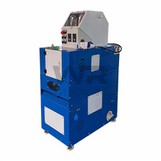

Parameter
|
Maximum pressure |
500KN |
|
Hopper inlet size |
520*450MM |
|
Hopper inlet height |
780mm |
|
Hopper capacity |
50L |
|
Raw material feeding method |
spiral |
|
Raw material compression method |
Hydraulic cylinder |
|
Dimensions after compression |
Φ70*10-50mm |
|
Machine Motor |
3kw |
|
Machine weight |
560kg |
|
Machine size |
800×1200×950mm |

Maximize Metal Value
By compressing light and oily metal chips into solid briquettes, recyclers can increase resale prices by 20–30%.
Save Space and Transportation Costs
The briquettes are dense and uniform, reducing storage space requirements and freight costs.
Cleaner and Greener Recycling
Our machine removes cutting oil and coolant during compression, allowing you to recycle both metal and oil — a win for both profits and sustainability.
Low Maintenance, High Reliability
Equipped with industrial-grade hydraulic systems and a fully enclosed structure, the machine ensures stable performance and minimal downtime.
Applications of Metal Briquetting Machines
Automotive Manufacturing
Factories producing engine blocks, gear housings, and transmission components often generate thousands of tons of cast iron chips annually. Briquetting provides a direct path to recycling.
Steel and Foundry Plants
High-density briquettes improve furnace efficiency, reduce slag, and enhance overall metallurgical recovery rates.
Aerospace and Precision Engineering
Materials such as titanium and aluminum alloys are expensive. Briquetting allows efficient recycling of chips, reducing material waste and costs.
Heavy Machinery and Construction Equipment
Large machining shops can handle bulky steel chips more easily with compact briquettes.
Installation Steps for Metal Briquetting Machines
Step 1: Positioning & Placement
Use a forklift or overhead crane to carefully position the machine over the anchor bolts. Lower it gently, guiding each bolt through the baseplate holes.
Step 2: Leveling & Alignment
Place precision leveling pads or shims under the base at all support points.
Using a precision machinist's level, adjust the shims to bring the machine to perfect level in both directions (front-to-back and side-to-side).
Critical Check: The main compression chamber and ram must be perfectly plumb (vertical). Misalignment here causes severe side-loading and rapid seal/cylinder wear.
Step 3: Securing & Grouting (The "Final Lock")
Tighten Anchor Nuts: Once leveled, uniformly tighten the anchor nuts to the specified torque.
Grouting: If specified, pour grout into the cavity between the baseplate and the foundation. This provides 100% uniform load bearing and prevents shifting. Follow the grout manufacturer's instructions for mixing and curing.
Step 4: Hydraulic & Electrical Connection
Hydraulic System:
Connect the hydraulic power unit (HPU) to the main cylinder via clean, high-pressure hoses.
Fluid: Fill the reservoir with the correct ISO-grade hydraulic fluid. Use a filter cart when filling to ensure cleanliness.
Electrical System:
A licensed electrician must connect the machine to the correct 3-phase power supply, matching voltage and amperage requirements.
Install a main disconnect switch within sight of the operator.
Ground the machine properly according to local codes.
Step 5: Peripheral System Integration
Feed System: Connect the chip conveyor or feed hopper. Ensure the feed rate matches the briquetter's cycle time to avoid overfeeding.
Coolant/Drainage System: Connect pipes from the machine's fluid drain port to your coolant recovery tank or waste oil containment system. Never let fluid drain onto the floor.
Briquette Handling: Plan for a conveyor, chute, or collection bin to handle the ejected briquettes.
Safety Precautions for Operating Metal Briquetting Machines
Wear tight-fitting protective clothing before operation, with cuffs fastened and the hem of the top not open. Do not wear, take off or change clothes next to a running machine tool, or wrap it around the body to prevent machine strangulation.
Before working on the baler, first start the equipment and run it idling for 3 minutes. At the same time, check whether the oil level in the fuel tank is sufficient, the sound of the oil pump is normal, and whether there are leaks in the hydraulic unit, pipes, joints, and pistons.
When turning over the bag, pull the handle of the cover cylinder to the return position, and then push the handle to turn over the bag. The area around the bag turning board should be cleaned in time every time the bag is turned over to prevent it from getting stuck.
When packing, the operator must pay attention to safety, fill evenly, and fill in place. The upper box lid door should be closed before packing can begin.
When packing, the hydraulic operating handle should be pushed to the designated position quickly to prevent valve blockage and insufficient hydraulic oil flow, resulting in motor overflow. For each action to be completed, the valve handle must be returned to the neutral position.
When stopping, the door cover should be closed, then stop the motor and cut off the power supply.
After packaging is completed, all hydraulic rods must be retracted into the hydraulic cylinder to prevent dust from damaging the sealing ring and causing oil leakage.
Perform regular maintenance work. If you find any oil leakage in the oil pipe, find a machine to repair it immediately.
If any abnormality is found, the operation should be stopped immediately and the cause should be eliminated before proceeding.
After the box lid door is opened, it is strictly prohibited to press the door to prevent accidents.
The oil in the fuel tank must be strictly filtered and sufficient oil volume must be maintained at all times. The oil tank should be cleaned and the oil should be changed every six months.
Each lubrication point of the equipment should be filled with lubricating oil at least once per shift as required, and the debris in the material box should be cleaned once per shift.
When multiple people operate at the same time, the division of labor should be clear to avoid danger caused by misoperation. Those who do not understand the main machine structure, performance and operating procedures are not allowed to operate the machine without authorization.
When the machine has serious oil leakage or abnormal phenomena occur during work, it should be stopped immediately. Don't look at the place where the oil is sprayed, don't block it directly with your hands, and don't force it to operate while sick.
When the machine is running or packing, it is not allowed to repair or touch the moving parts with your hands. It is strictly forbidden to use your hands or feet to press the materials in the material box.
Adjustments to pumps, valves, and pressure gauges must be made by experienced technicians. If the pressure gauge is found to be faulty, it should be repaired or replaced immediately.
Customizable Options
|
Briquette Shape |
Round, square, hexagon |
|
Briquette Size |
40–200 mm (custom) |
|
Motor Power |
15–250 kW |
|
Automation |
Manual, Semi-auto, Full-auto |
Packaging and Shipping
|
Packaging |
Inner package: Covered by plastic film Outter package: Plywood case |
|
Shipping |
By sea |
FAQ
As one of the leading metal briquetting machines manufacturers and suppliers in China, we warmly welcome you to buy advanced metal briquetting machines for sale here from our factory. All customized machines are with high quality and competitive price. Contact us for quotation.
metal chips briquetting machine