

Horizontal Metal Balers
Your Professional Horizontal Metal Balers Supplier
Wisdom Ring Machinery is a professional manufacturer of scrap recycling equipment. We provide copper recycling machines, shredders, balers, metal shears, tire recycling lines, and plastic recycling equipment for customers in recycling, waste processing, and metal recovery industries worldwide.
Experienced Manufacturing
With over 30 years of industry experience, we focus on stable machine performance, practical design, and long-term operation for industrial recycling applications.
Strong Technical Team
Our team includes 15 engineers dedicated to product development and technical improvement, helping customers achieve efficient and reliable recycling processes.
Complete Customer Support
We provide complete service from machine selection and production to installation and after-sales support, ensuring smooth communication and dependable cooperation.
-
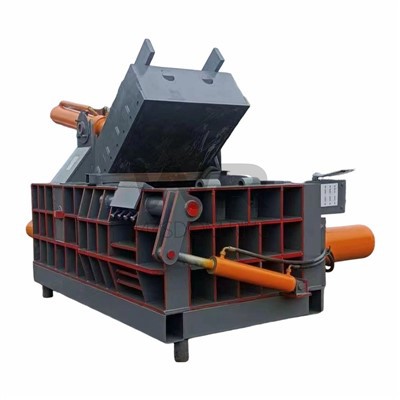 Hydraulic Scrap Metal Baling Press MachineEngineered for Maximum ROI: Dense bales command premium prices from mills, while reduced transport and storage costs directly improve your bottom line.Built for European Industrial Standards:Add to Inquiry
 -
 Scrap Metal BalerEngineered for Durability & High Uptime: Built with premium components to withstand the most abrasive and demanding environments, ensuring a rapid return on investment.Maximizes Your Scrap Value:Add to Inquiry



Parameter
|
Model |
Pressure(ton) |
Press room size(m) |
Block size(cm) |
Power(kw) |
Machine size (m) |
|
W-B60 |
60 |
0.6x0.5x0.35 |
30*15*15 |
11 |
2.1*1.9*1.35 |
|
W-B100 |
100 |
1.2x0.7x0.45 |
40*25*25 |
18.5 |
3.3*2.3*1.8 |
|
W-B140 |
140 |
1.3x0.8x0.5 |
60*30*30 |
22 |
3.5*2.3*1.8 |
Advantages of Horizontal Metal Balers


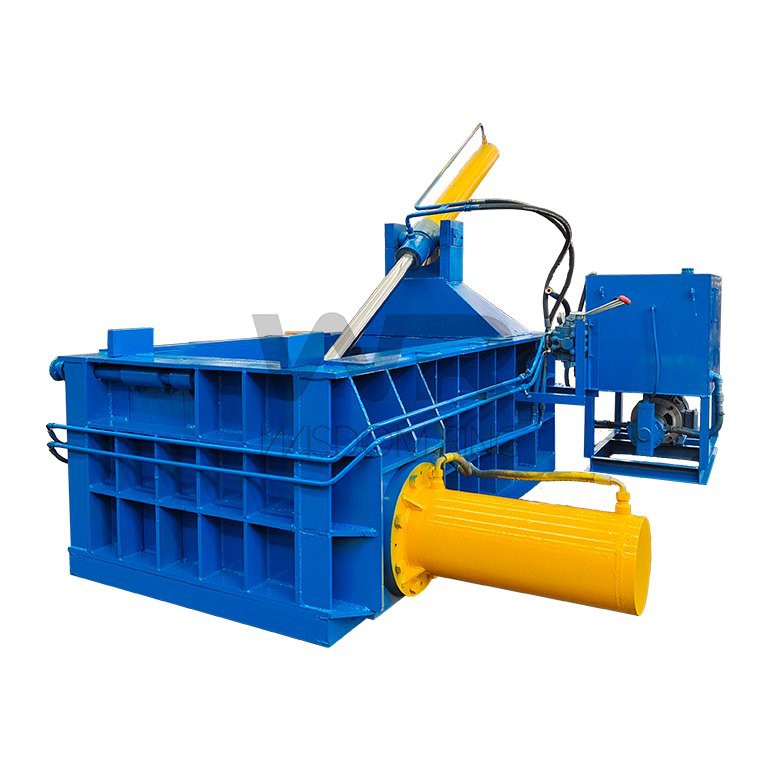

Extreme Throughput – Designed for Large-Scale Continuous Operation
The most notable advantage of a horizontal baler is its throughput capacity. Unlike vertical balers (typically 0.5–3 tons/day), horizontal models easily handle 5, 10, or even 50+ tons per day. The horizontal chamber combined with conveyor feeding enables continuous feed, compression, and bale ejection – no waiting for manual loading after each cycle.
Higher Bale Density – More Profit Per Bale
Horizontal balers use multi-stage compression technology with larger hydraulic cylinders , producing much higher bale density than vertical models. For cardboard: 600–700 kg/m³; Higher density = more material per truckload = lower freight costs + higher bale resale value.
Fully Automatic Operation – Drastically Reduce Labor Costs
Most horizontal balers come with PLC control and HMI touchscreen, enabling one-button fully automatic operation: material sensing, automatic compression, automatic wire tying, and automatic bale ejection. One operator can monitor 2–3 machines simultaneously, requiring only a few minutes of daily checks.
Automatic Wire Tying – Reliable, No Manual Threading
Horizontal balers come standard with automatic wire/strap tying systems. Depending on the model, they can be configured with 5–7 wires or plastic straps. The system automatically feeds, tensions, and crimps, achieving a success rate of 99.5%.
Continuous Operation – Built for Industrial-Grade Duty
Horizontal balers feature dual-pump hydraulic systems and oversized coolers, allowing continuous 24/7 operation without overheating. Key components (hydraulic cylinders, main motors, bearings) are designed to industrial standards, with service life of 10–15 years.
Applications of Horizontal Metal Balers
Recycling Facilities
Recycling centers use horizontal balers to process scrap metal from various sources. By compressing metals into dense bales, they streamline transportation to smelters and reduce storage space.
Automotive Industry
Auto manufacturers and dismantling yards generate large amounts of metal waste. Horizontal balers help in compacting shredded car parts, making it easier to recycle metals and comply with environmental regulations.
Manufacturing Plants
Factories producing metal waste during production use balers to manage waste efficiently. They can bale leftover scrap, reducing clutter and facilitating reuse or recycling, ultimately lowering waste disposal costs.
Construction & Demolition
Construction sites generate significant metal debris. Horizontal balers allow for on-site processing, minimizing transportation costs and ensuring safer, cleaner work environments.
Mechanical Structure of Horizontal Metal Balers
|
Component |
Function |
|
Hydraulic System |
The power source of the entire machine, driving all compression operations through high-pressure fluid |
|
Compression Chamber |
The enclosed space where metal materials are loaded and compressed into dense bales |
|
Door Assembly |
Hydraulically-controlled door that descends to create a sealed compression cavity |
|
Push-out Mechanism |
Hydraulic arms that eject finished bales from the compression chamber |
|
Control Console |
Operator interface for controlling machine functions and adjusting processing parameters |
|
Safety Interlocks |
Emergency stop systems and overload protection devices for operator safety |
Maintenance Guidelines for Horizontal Metal Balers
|
Maintenance Task |
Frequency |
Details |
|
Hydraulic Component Inspection |
Weekly |
Check power steering valve, motor, electromagnetic reversing valve, and all hydraulic connections for leaks or wear |
|
Hydraulic Oil Analysis |
Monthly |
Inspect oil cleanliness and quality; replace hydraulic oil promptly if contamination is detected |
|
Screen and Relief Valve Cleaning |
Monthly |
Clean hydraulic system screen and relief valve; make necessary pressure adjustments |
|
Oil Tank Maintenance |
Quarterly |
Check oil levels and add clean hydraulic oil as needed; inspect tank for sediment buildup |
|
Oil Pump Inspection |
Bi-annually |
Assess pump performance and replace if efficiency degradation is observed |
|
Full System Overhaul |
Annually |
Complete hydraulic system inspection including seals, hoses, and cylinder conditions |
Customizable Options
Feed method
Slat conveyor, belt conveyor, ram feeder, or forklift loading
Bale size
Custom length, width, height based on downstream buyer requirements
Number of wires
3–7 wires optional
Packaging and Shipping
|
Packaging |
Inner package: Covered by plastic film Outter package: Plywood case |
|
Shipping |
By sea |
FAQ
As one of the leading horizontal metal balers manufacturers and suppliers in China, we warmly welcome you to buy advanced horizontal metal balers for sale here from our factory. All customized machines are with high quality and competitive price. Contact us for quotation.
mobile cardboard baler, hydraulic cardboard baler, rubbish baler