

Cardboard Balers
Your Professional Cardboard Balers Supplier
Wisdom Ring Machinery is a professional manufacturer of scrap recycling equipment. We provide copper recycling machines, shredders, balers, metal shears, tire recycling lines, and plastic recycling equipment for customers in recycling, waste processing, and metal recovery industries worldwide.
Experienced Manufacturing
With over 30 years of industry experience, we focus on stable machine performance, practical design, and long-term operation for industrial recycling applications.
Strong Technical Team
Our team includes 15 engineers dedicated to product development and technical improvement, helping customers achieve efficient and reliable recycling processes.
Complete Customer Support
We provide complete service from machine selection and production to installation and after-sales support, ensuring smooth communication and dependable cooperation.
-
 Industrial BalerMaximized Operational ROI: Reduces waste volume by up to 90%, directly cutting storage and hauling costs while creating a saleable commodity from waste.Engineered for European Standards: FullyAdd to Inquiry
 -
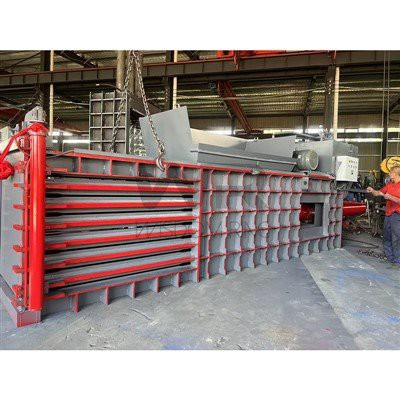 Cardboard Baler MachineProven Return on Investment (ROI): Quickly pays for itself through reduced waste hauling fees, reclaimed storage space, and revenue from bale sales.Built for the European Market: CE-certified,Add to Inquiry



Parameter
|
Model |
Pressure |
Packaging Dimensions |
Packing Weight |
Power |
Dimensions |
|
W-CB160 |
160ton |
1800*1100*1250mm |
1000-1300kg |
37kw |
9200*1300*3100mm |
|
W-CB180 |
180ton |
1800*1100*1250mm |
1100-1300kg |
37kw |
9400*1500*3100mm |
|
W-CB200 |
200ton |
1800*1100*1250mm |
1100-1300kg |
45kw |
9400*1500*4300mm |

Cut Trash Collection Costs
Loose cardboard eats up a lot of space. Compressing it into bales means fewer pickups, which lowers your trash management bills. In some cases, you can even earn extra income by selling the bales to recycling companies.
Reclaim Valuable Space
Uncompacted cardboard quickly clutters storage areas, backrooms, and even sales floors. A baler frees up that space, boosting efficiency, safety, and the overall look of your workplace.
Lower Your Environmental Footprint
Baled cardboard is far easier to recycle efficiently. Using a baler shows customers and employees that your business is serious about sustainability.
Save Time and Labor
Manually breaking down boxes takes time and energy. A baler automates the job, letting your team focus on more important tasks—meaning less time dealing with trash and more time serving customers.
Boost Workplace Safety
Loose piles of cardboard can cause a fire hazard or a tripping risk. A baler keeps your workspace clean and organized, creating a safer workplace.
Key Components of Cardboard Balers
Hydraulic System
Includes pumps, cylinders, oil tanks, and valves to provide compression force
Compression Chamber
The cavity where cardboard is compacted, typically made of wear-resistant steel plate
Press Ram
The heavy steel plate that directly contacts the cardboard and applies pressure
Strapping System
Automatic or manual strapping/wire strapping mechanism
Control System (PLC)
Touchscreen interface for parameter setting, monitoring, and diagnostics
Feeding System
Conveyor belt or hopper that ensures continuous or batch feeding
Connect the baler to a power supply. Whether it’s a hydraulic baler or a pneumatic baler, you will need a suitable power source.
Ensure that the operator is either a trained staff member or that a trained staff member is present.
Load the cardboard into the baler’s chamber
Once the chamber is full, close the main door and pull the activation switch
This activates the baler’s ram, which presses down the cardboard
For safety reasons, EN16500-compliant balers allow no access to moving parts
Repeat until the cardboard inside the chamber forms a compact bale and the machine indicates that it ready to be emptied
Tie off the finished bale using appropriate banding
Empty the baler through either a manual or automated bale-out mechanism
Stack and store the cardboard bales, which can be collected by a recycler

Simple Maintenance Checklist for Your Cardboard Baler
Daily
Check the area for debris and ensure safety guards are in place.
Weekly
Perform routine inspections of the baling wire or strapping supply. Check hydraulic hoses for any signs of leaks or wear.
Monthly
Conduct hydraulic oil checks to ensure the fluid is at the correct level and clean.
Annually
Schedule a professional service to inspect all components, as recommended by the manufacturer’s maintenance and care plan.
Inquiry
Quotation
Communication
Order confirming
Deposit payment
Production
Testing and debugging
Balance payment
Packing
Delivery
Customer receiving
After service
Packaging and Shipping
|
Packaging |
Inner package: Covered by plastic film Outter package: Plywood case |
|
Shipping |
By sea |
FAQ
As one of the leading cardboard balers manufacturers and suppliers in China, we warmly welcome you to buy advanced cardboard balers for sale here from our factory. All customized machines are with high quality and competitive price. Contact us for quotation.
balers, press baler, vertical baler machine